
Clinical Evidence

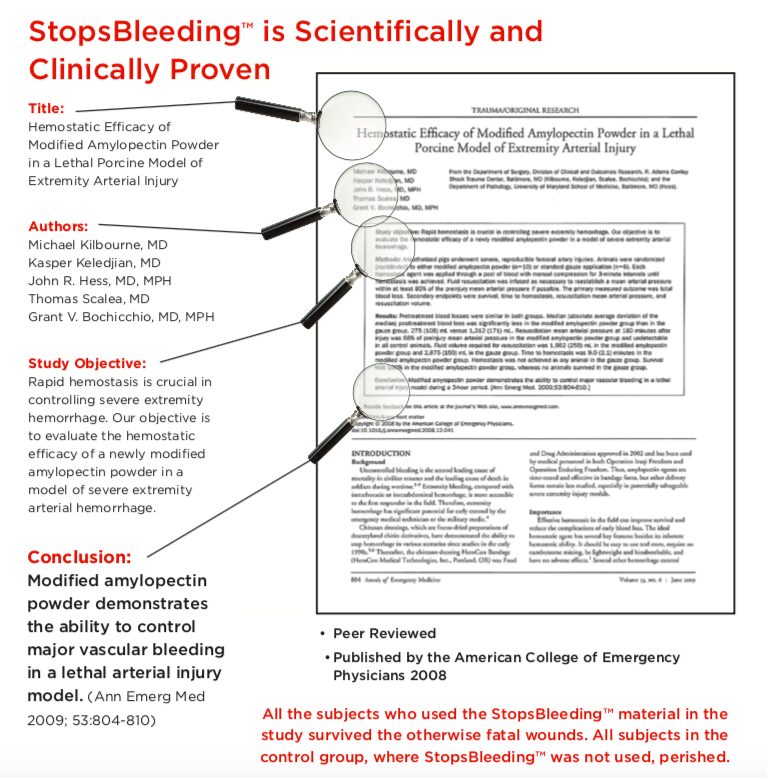
This animal study, conducted by five independent medical doctors, was performed on swine by completely severing femoral arteries. The results were peer reviewed, it was presented at a major medical conference, and it has been published in a major medical journal. – Annals of Emergency Medicine 2009, The American College of Emergency Physicians.

The FDA has not granted StopsBleeding™ a general claim for all arterial bleeding situations, and some arterial uses, even if effective, would be off-label uses. However, this study indicates its effectiveness on severed femoral arteries in swine. StopsBleeding™ has been approved for moderate to severe bleeding wounds for humans by the FDA with an Rx prescription, and the FDA has allowed the claim of “Safe in the Wound” for humans. Many doctors in the United States and around the world, including the Ukrainian Military on their frontline soldiers, have used StopsBleeding™ for arterial wounds. CoAg Medical has been granted six awards by the Ukrainian Parliament, presented in person and before Parliament by Ruslan Stefanchuk, Chairman of the Verkhovna Rada (Parliament) of Ukraine.

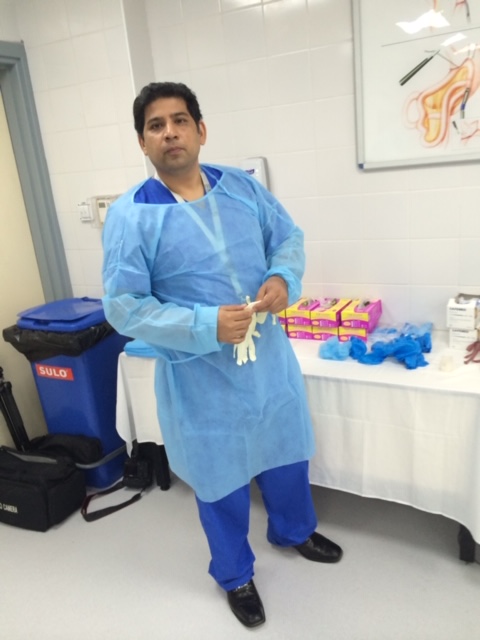
BleedStop Clinical Trials 1
Dr Amir Clinical Evidence

Also Tested by the United Arab Emirates Zayed Military Base and the Egyptian Military • Utilized by the largest trauma center in Iraq


FDA Cleared “Safe in the Wound”

NAMSA GLP Independent Laboratory 

Animal Study (Full Study Available)

GLP Evaluation
Conclusion:
The objective of this study was to evaluate local tissue response to StopsBleeding™ hemostatic powder in a chronic rabbit subcutaneous implant model. There were no adverse events, clinical observations, abnormal clinical pathology, or abnormal gross pathology attributed to the test article.
 
To paraphrase the study, all animals observed after the 4-week period were in the same condition as when they started. The StopsBleeding™ powder in the animals’ bodies had no adverse effect on any of the animals or in any of the sites.
 
Summary:
The in-life assessment for each animal was clinically normal upon entering the study and all animals remained healthy during the in-life portion of the study. There were no adverse events noted during the study. According to the physical examinations, the clinical pathology results, the daily observations, the procedures, and the in-life assessment all animals in this study demonstrated adequate health to assess the objective of the study.